



OPINION:
For years, ProPublica has built its reputation on a simple premise: Follow the money.
Whenever ProPublica investigates a corporation, a politician, industry or public policy initiative, its first questions are usually the same: Who benefits, who pays and what interests may be operating behind the scenes?
That is a legitimate journalistic approach. It is also a litmus test that should be applied to ProPublica itself.
Consider ProPublica’s recent investigative attention toward two emerging companies central to America’s effort to rebuild domestic critical mineral and rare earth supply chains: ReElement and Vulcan.
These are precisely the kinds of small, innovative companies the United States must develop if it hopes to reduce its dangerous dependence on China for materials essential to advanced manufacturing, energy systems, defense production and artificial intelligence.
One would expect a nonprofit investigative newsroom committed to the public interest to recognize the strategic importance of this effort.
Instead, ProPublica weaves a flimsy web of suggested cronyism from anonymous government sources, unproduced government agency records and insinuation — and then quietly concedes, between the lines, that the public evidence does not prove the charges.
That kind of thinly sourced attack is not harmless. For smaller companies trying to finance expansion, build facilities, hire workers and scale production in strategically vital sectors, reputational damage can raise capital costs, chill investors, delay projects and hand China another unearned advantage.
America winds up paying the price.
Of course, this self-styled transparency watchdog has every right to scrutinize public spending. Still, when it trains its fire on efforts central to American economic and national security at the very moment China is weaponizing those same supply chains, ProPublica’s editorial priorities deserve scrutiny as well.
That scrutiny should begin where ProPublica so often begins with others: by following the money.
ProPublica is not a neutral institution floating above politics. Among its major donors are organizations and philanthropists associated with progressive causes, environmental activism and left-of-center public policy advocacy. Some occupy the same broader philanthropic ecosystem that has long opposed President Trump’s trade, tariff, energy and China policy agenda.
None of this proves editorial bias, but neither is it irrelevant.
Every institution develops a culture. Every funding network creates incentives. Every newsroom makes choices about which stories deserve attention and which do not.
The more important observation is that many of the philanthropic networks that support ProPublica also participate in a broader policy ecosystem that has often been skeptical of tariffs, domestic resource development, mining expansion, fossil fuel infrastructure and other initiatives now central to American supply chain resilience.
The China dimension is more subtle here but equally important.
There is no public evidence that ProPublica is funded by the Chinese government or acts directly on behalf of Chinese interests. That is not the point.
The point is that portions of the broader donor and prestige ecosystem around ProPublica have long-standing business, intellectual or philanthropic proximity to China-facing institutions and ideas.
A poster child is Crankstart, the family foundation of Michael Moritz, the former Sequoia Capital leader whose career was intertwined with Silicon Valley’s China era and who once wrote in the Financial Times that “Silicon Valley would be wise to follow China’s lead.”
Again, that does not prove editorial control or improper influence, but it does illustrate the broader point: Proximity is exactly the kind of fact ProPublica would treat as relevant if it were investigating anyone else.
Proximity matters when the subject under attack is America’s effort to escape dependence on Chinese critical minerals.
Beijing’s interests in this matter are obvious. Every domestic refining facility, every new processing technology, every successful rare earth company and every breakthrough in critical mineral production weakens Beijing’s leverage over the United States and its allies.
The deeper issue of journalistic integrity extends far beyond ProPublica.
Public trust in journalism has collapsed. Poll after poll shows that Americans increasingly view major media institutions not as neutral truth-seekers but as political actors. That viewpoint exists because many news organizations have spent years blurring the line between reporting, advocacy and activism.
The tragedy is that investigative journalism remains one of the most important functions in a free society. Genuine watchdog reporting exposes corruption, protects taxpayers and holds powerful institutions accountable.
Yet when watchdog journalism becomes selective, ideological or blind to its own conflicts, it stops restoring trust and starts confirming why so many Americans lost it in the first place.
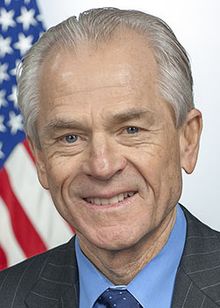
• Peter Navarro is the White House senior counselor for trade and manufacturing. www.peternavarro.com
Follow the author

Please read our comment policy before commenting.