



OPINION:
Many years ago, Ross Lence arrived at Indiana University from Whitefish, Montana, to study with the distinguished political scientist Charles Hyneman.
At their first meeting, Hyneman asked, “Have you seen it?”
“Seen what?”
“America, of course.”
“Just between Montana and here.”
“Well, then let’s go.”
For several years, they crisscrossed the country, encountering its people, places, greatness and failures. The experience helped make Lence one of the most beloved teachers of American politics at the University of Houston.
Today, American overseas travelers often hear, as I have, “We like Americans, but we don’t like America.”
The recent World Cup competition gave the world insights into our true colors — and an opportunity for foreign critics to change their minds. Many did.
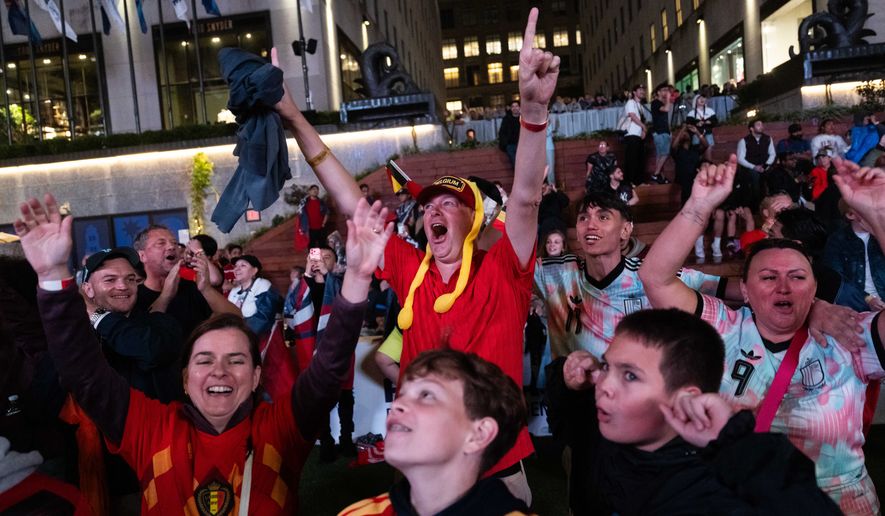
For the first time in the social media era, the world experienced America up close and personal through the eyes and experiences of hundreds of thousands of global visitors who traveled here to witness soccer competition. More important, they witnessed the real America.
The World Cup allowed people to bypass the stereotypes and encounter America’s civic culture firsthand. They were won over not by advertising campaigns but by ordinary Americans instinctively embodying American principles and habits: friendship, generosity, helpfulness, kindness, love of country, openness and the belief that all people should be treated as equals.
First, they found that Americans are genuinely hospitable. Visitors described complete strangers offering advice, rides, meals, invitations and friendship. England supporter Oliver Henry wrote, “The people of Texas have been the friendliest and most accommodating people I have ever met.” A much earlier visitor, Alexis de Tocqueville, would have understood.
American egalitarianism is a social habit: the assumption that foreigners may be spoken to, helped and welcomed as peers, as social equals. A Moroccan visitor put it memorably: “A stranger would be your family.”
Visitors also discovered that patriotism need not be exclusionary. Many expected American pride to imply hostility toward outsiders. German fan Sebastian Kraus became emotional describing American kindness. “America is great,” he said. National pride, they learned, can be shared rather than hoarded.
Visitors also encountered the personal side of American commercial society. Visitors praised restaurants, stores, stadiums, hotels, drivers and service workers. A German fan wrote of Waffle House at 1 a.m., “Great food, great prices, and friendly staff. 10/10.” These visitors did not fall in love with free market economic theory. They fell in love with the visible results of our free market economy: abundance, convenience, hospitality and people eager to earn their gratitude.
That spirit appeared in their fascination with Buc-ee’s, Costco, barbecue, drive-thrus, free refills and ranch dressing. One visitor called Costco “probably the best store I’ve ever been to.” American abundance grew from a culture rewarding invention, service, scale and entrepreneurial risk.
The most distinctly American stories involved people spontaneously helping visitors. Many were welcomed into homes and helped with their itineraries. A Japanese fan traveling on a budget reported that a social media follower “got me this amazing hotel.” In one case, according to news reports, Americans raised more than $10,000 to help a visitor extend his trip.
In America, with our tradition of civic engagement, a stranger in need stops being a stranger.
Visitors also glimpsed federalism. They experienced larger-than-life Texas hospitality, Boston’s embrace of the Tartan Army, dancing in the streets of New York, Southern cuisine, Kansas City’s and New Orleans’ distinctive jazz cultures, and other local and regional customs and eccentricities. They discovered multiple cultures held together by a common national disposition.
The most dramatic social media posts were framed as apologies. Visitors said their experiences contradicted news reports and online stereotypes. Oliver Henry wrote, “America is nothing like what the media tells us.” Another visitor said, “The American people welcomed me with open arms, and for that I’ve fallen in love with the USA.”
World Cup visitors did not find that America is without problems. They found something more important: that American principles live not only in our Constitution and Declaration of Independence but also in the conduct of our people — when strangers lend a helping hand, families open their homes, entrepreneurs create unique products and experiences, and an entire country welcomes weary travelers with open arms.
We still have problems, but we are constantly in search of solutions, which is why the American experiment remains as compelling today as it was in 1776, and why America remains a magnet for those seeking a better life.
• Frederic J. Fransen is president of Amerion College in Huntington, West Virginia.

Please read our comment policy before commenting.